


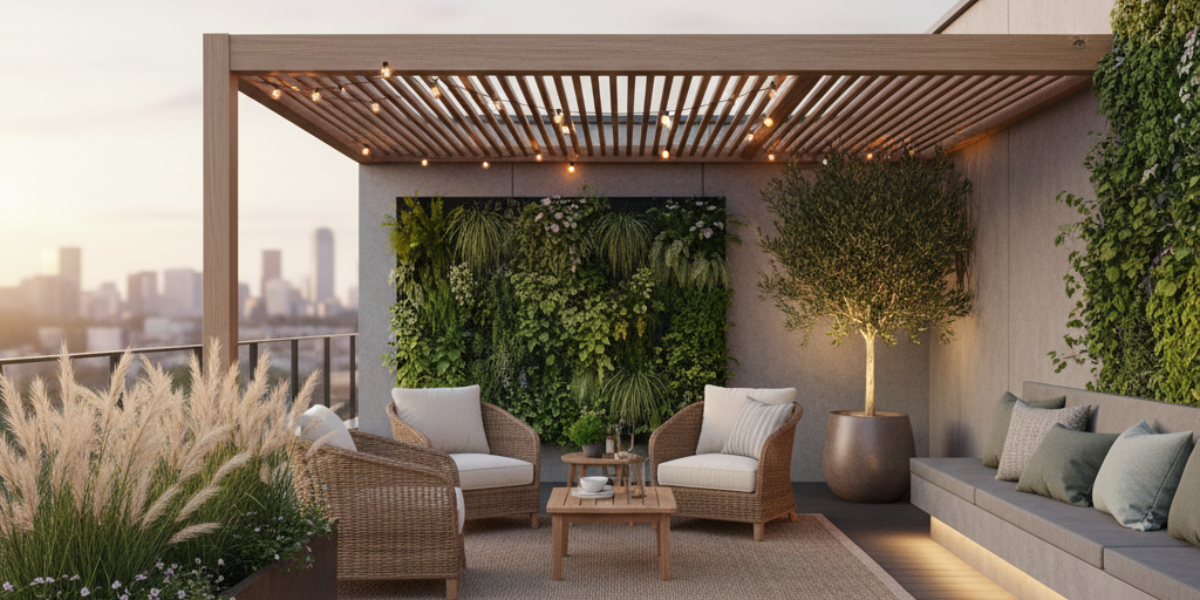
Balconies and terraces are no longer seen as secondary spaces in contemporary architecture. Today, they play a vital role in how homes function, feel, and connect with the outdoors. Thoughtful balcony and terrace landscaping can transform even the smallest outdoor area into a calm retreat, a social hub, or a green extension of indoor living.
This ultimate guide explores practical ideas, material choices, and design inspiration to help you create an outdoor space that feels purposeful, stylish, and sustainable.
Understanding the Role of Landscaping in Outdoor Spaces
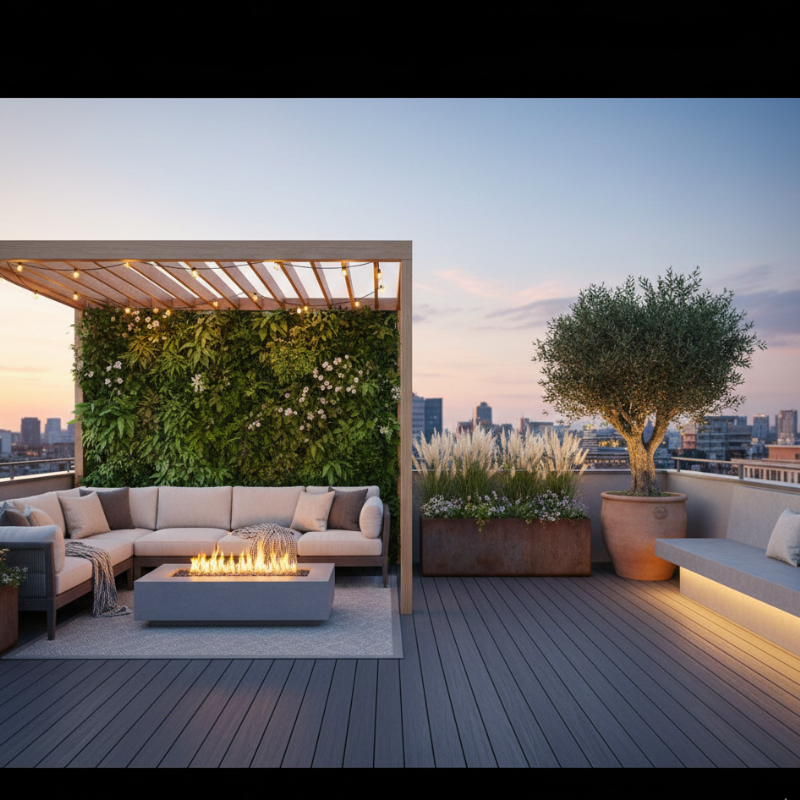
Landscaping is more than adding plants—it’s about shaping how a space is used and experienced. A well-designed balcony or terrace balances greenery, structure, and movement. It considers sun exposure, wind flow, drainage, and maintenance while enhancing visual appeal.
Whether it’s a compact apartment balcony or a spacious rooftop terrace, landscaping helps define zones, soften architectural edges, and create a sense of privacy and comfort.
Planning Before You Design
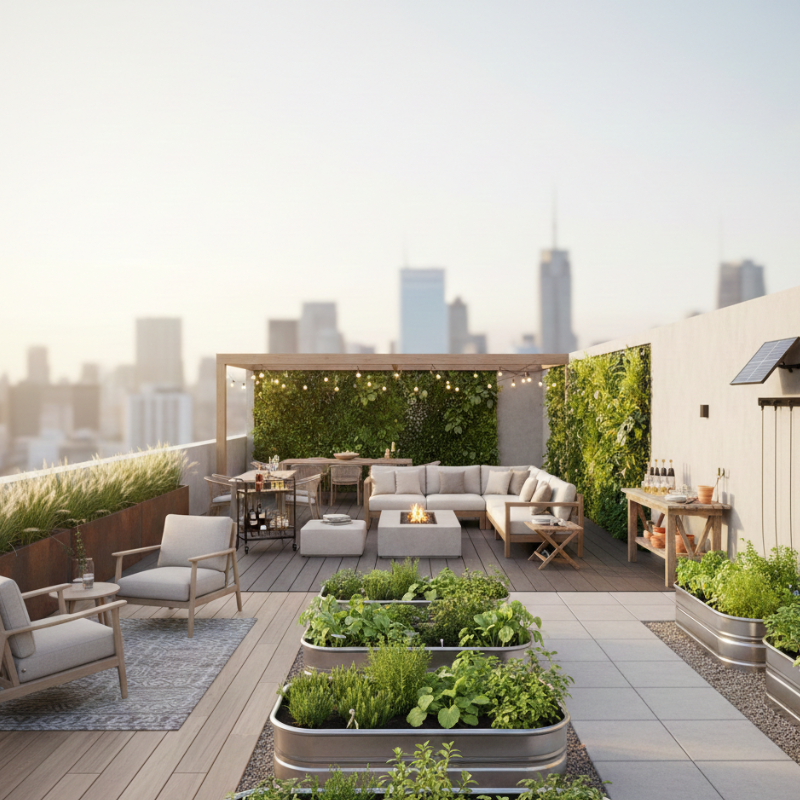
Successful landscaping always begins with intent. Ask yourself how the space will be used. Is it for relaxing, entertaining, gardening, or everyday family use? Defining these early influences layout decisions, furniture selection, and plant placement.
It’s also important to assess practical factors such as weight load, waterproofing, sunlight hours, and access to water. These elements ensure the design is both beautiful and functional in the long term.
Landscaping Ideas for Balconies

Balconies often have limited floor area, making vertical design essential. Wall-mounted planters, railing pots, hanging baskets, and trellises allow greenery to flourish without overcrowding the space.
Foldable or built-in seating works well in small balconies, while planters can double as subtle dividers. Light-colored flooring and minimal furniture help maintain an open feel, preventing the space from feeling cramped.
For urban settings, balcony gardens also serve as natural buffers against noise and pollution, improving both comfort and well-being.
Terrace Landscaping Ideas That Add Structure
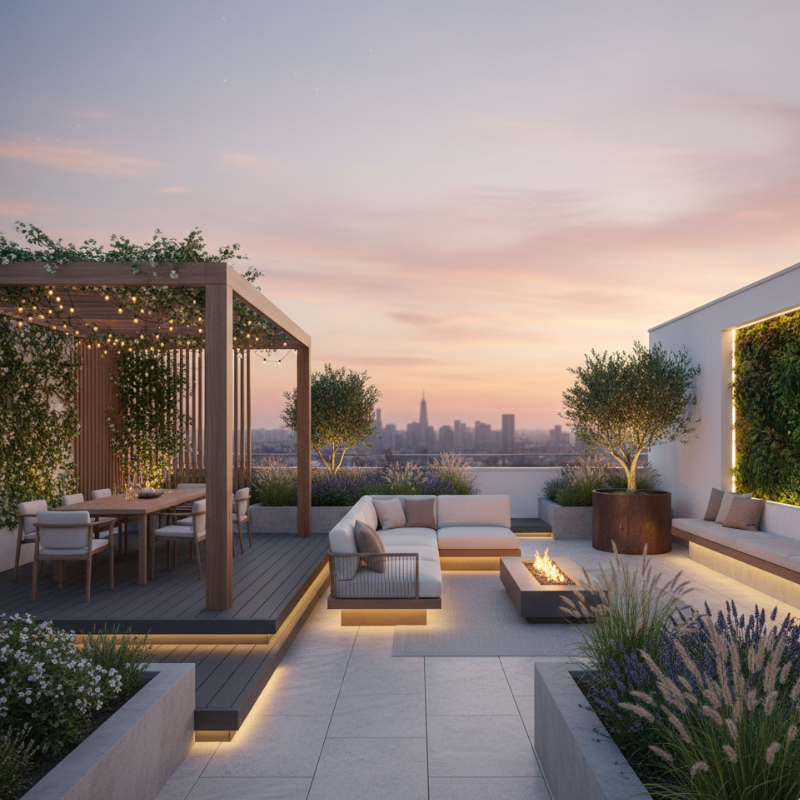
Terraces offer more flexibility and can accommodate layered designs. Zoning is a key concept—separate areas for seating, dining, and greenery create clarity and flow.
Raised planters, pergolas, or partial walls help define these zones while adding architectural interest. Incorporating shade elements such as pergolas, retractable awnings, or fabric canopies makes terraces usable throughout the day.
Terrace landscaping often benefits from a balance between hardscape elements and greenery, creating a grounded yet inviting environment.
Choosing the Right Materials
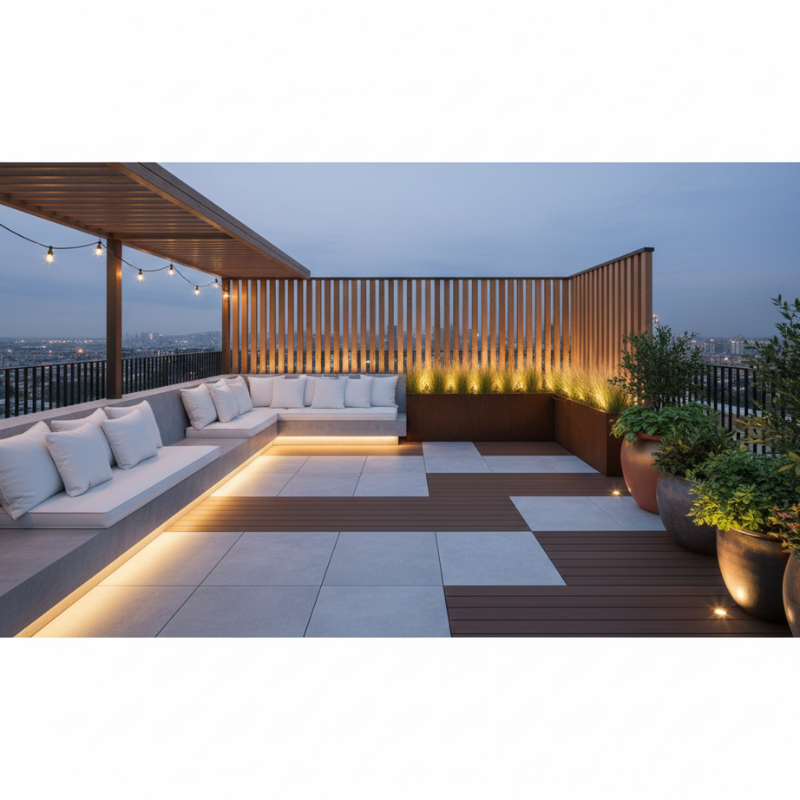
Material selection plays a critical role in both aesthetics and durability. Outdoor flooring options include natural stone, porcelain tiles, composite decking, and treated wood. Each material brings a distinct character while offering different maintenance requirements.
Planters can be crafted from concrete, ceramic, metal, or wood, depending on the design language. For railings, screens, and partitions, materials like wood slats, metal grids, or glass panels offer varying levels of privacy and openness.
The key is choosing materials that are weather-resistant, safe, and consistent with the overall architectural style.
Plant Selection That Works Long-Term
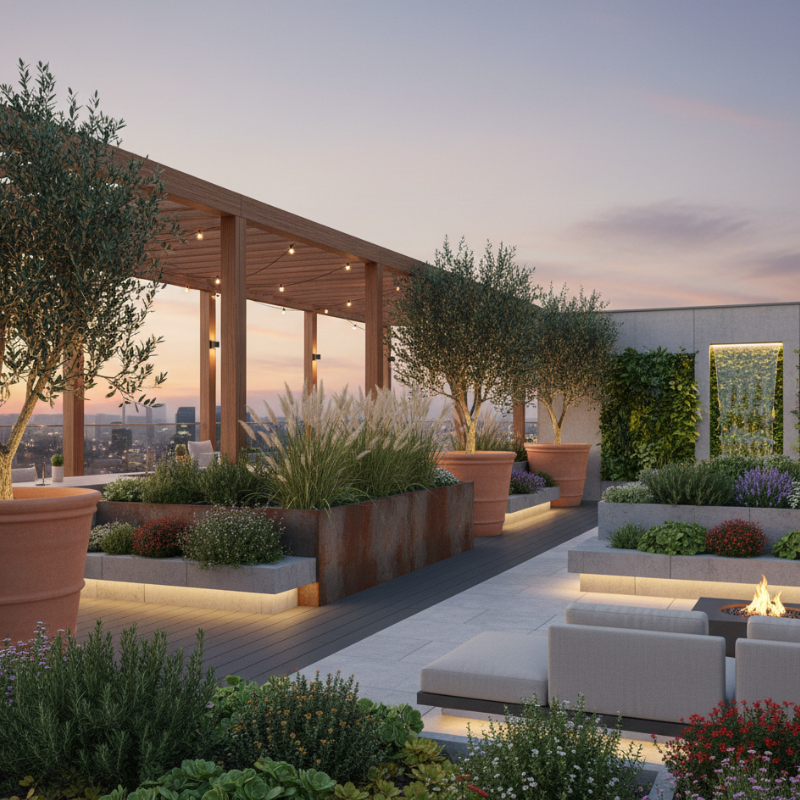
Plants should be selected based on climate, sun exposure, and maintenance capacity. Native and climate-adapted plants tend to thrive with minimal intervention.
Mixing plant heights—ground cover, shrubs, and small trees—adds depth and visual interest. For terraces, potted trees or tall grasses can act as natural screens, while herbs and flowering plants bring color and fragrance.
Low-maintenance landscaping ensures the space remains enjoyable rather than becoming a burden.
Lighting for Atmosphere and Function
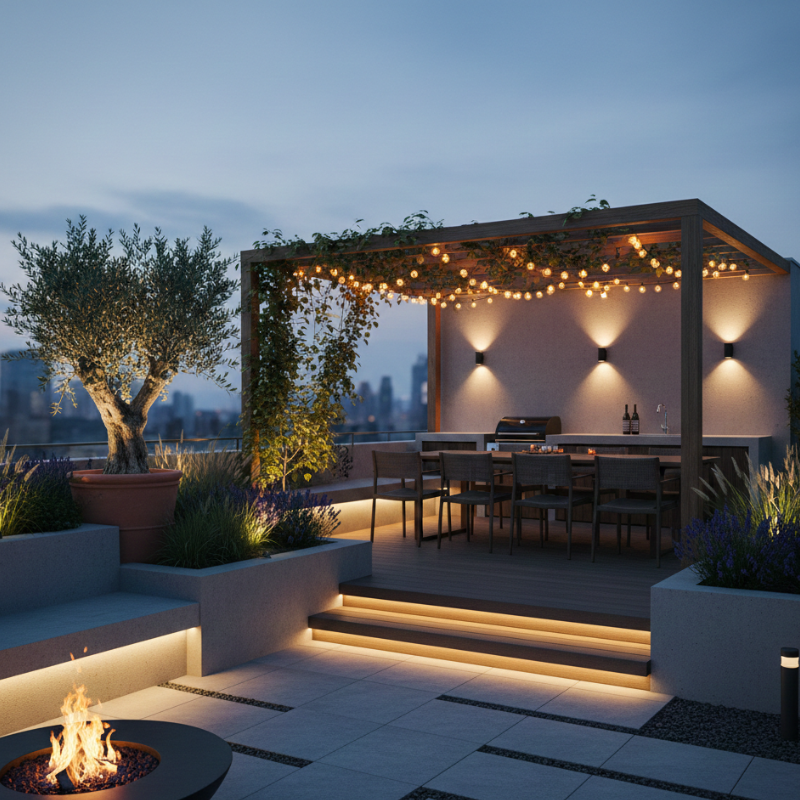
Lighting transforms outdoor spaces after sunset. A layered lighting approach works best—ambient lighting for overall glow, task lighting for dining or cooking areas, and accent lighting to highlight plants or textures.
Wall-mounted lights, floor lanterns, recessed LEDs, and solar fixtures are popular choices. Well-planned lighting enhances safety while creating a warm and welcoming atmosphere.
Privacy Without Compromising Design
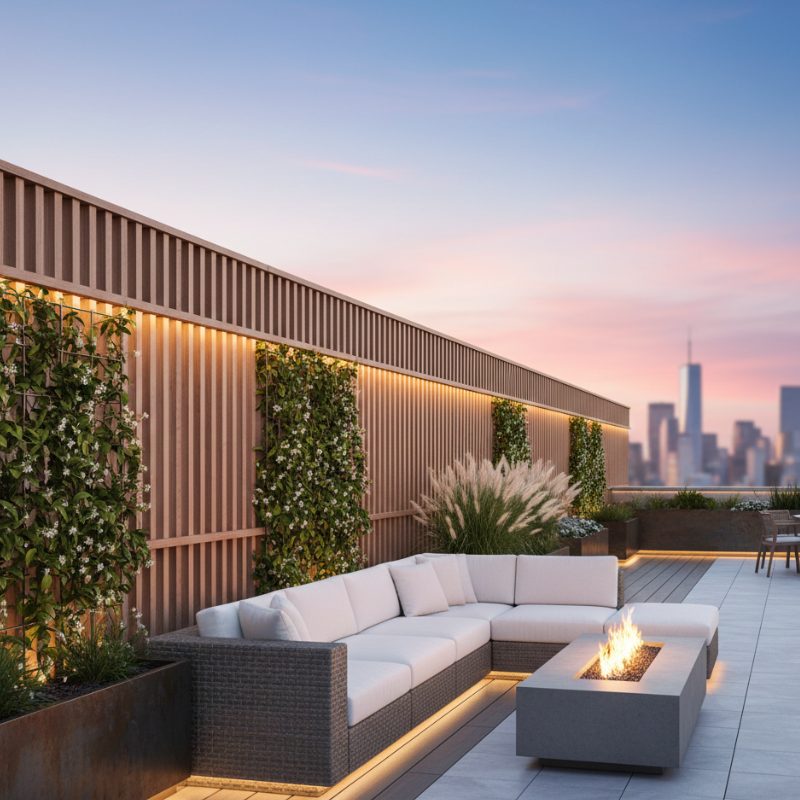
Privacy is a common concern, especially in dense urban settings. Instead of solid walls, consider semi-transparent solutions such as slatted screens, perforated panels, or green walls.
Climbing plants on trellises offer a natural and visually soft alternative. These solutions maintain airflow and light while creating a sense of seclusion.
Sustainable Landscaping Choices
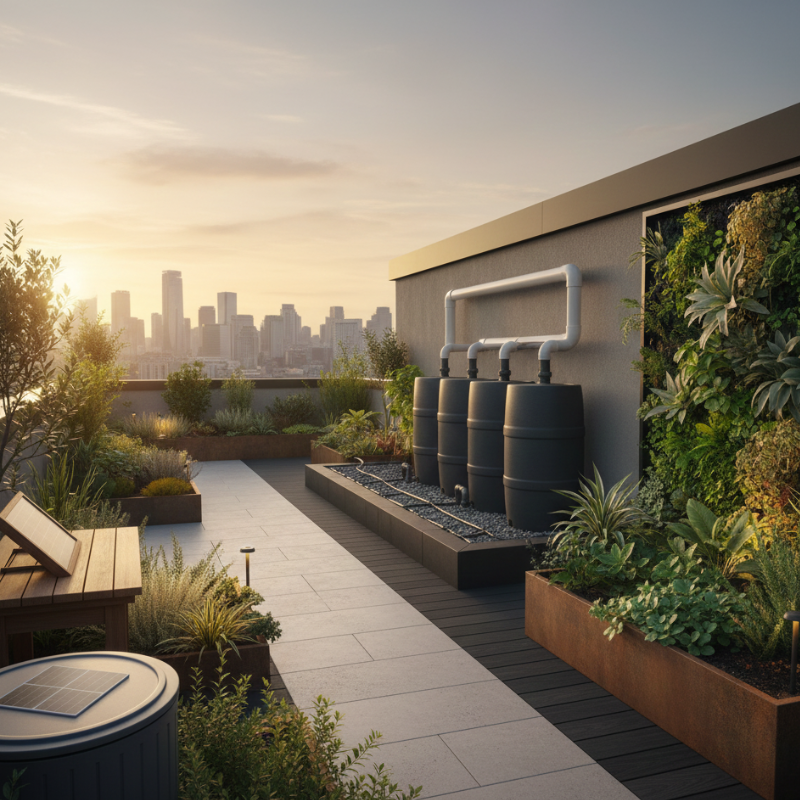
Sustainability is becoming central to outdoor design. Using recycled materials, installing solar lighting, collecting rainwater for irrigation, and choosing native plants all contribute to eco-friendly landscaping.
Green terraces also help regulate indoor temperatures, reduce heat buildup, and improve air quality—making them both environmentally and architecturally valuable.
Adding Personal Character

The most memorable balconies and terraces reflect the people who use them. Textiles, outdoor rugs, planters, artwork, and lighting details add personality and warmth.
These finishing touches turn a landscaped space into a lived-in environment rather than a purely decorative one.
Final Thoughts
Balcony and terrace landscaping is an opportunity to extend architectural thinking beyond walls and ceilings. With the right balance of planning, materials, greenery, and design intent, outdoor spaces can become essential parts of everyday living.
At Ideas for Architecture, we believe that great outdoor design blends function, beauty, and context. If you’re looking to reimagine your balcony or terrace, explore more design insights and inspiration across our platform—and let your outdoor space evolve into something truly meaningful.