


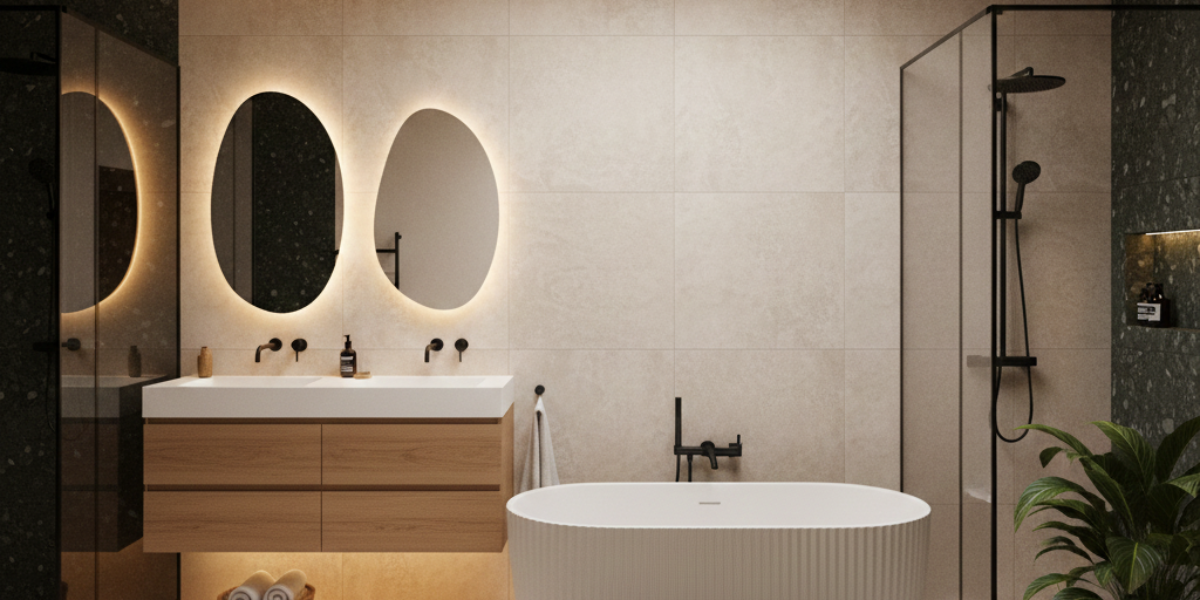
Bathrooms have evolved far beyond their traditional role as purely functional spaces. Today, they are designed as calming retreats that reflect personal style while supporting everyday comfort. As interior design continues to prioritize well-being, sustainability, and smart use of space, bathroom trends this year strike a balance between aesthetics and practicality.
Whether you are planning a full renovation or simply looking to refresh your existing space, understanding the latest bathroom interior design trends can help you make informed decisions that feel modern yet timeless. Here are the top bathroom interior design trends you should know this year.
1. Calm, Nature-Inspired Color Palettes
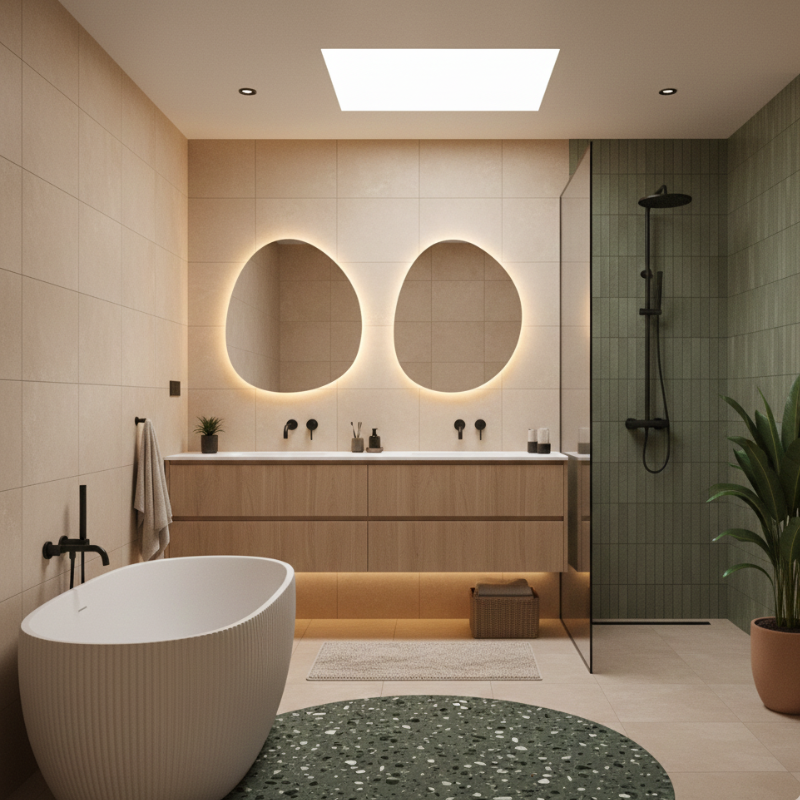
One of the strongest trends this year is the move toward soft, nature-inspired colors. Neutral tones such as warm beige, sand, soft grey, and off-white continue to dominate, creating a serene and relaxing atmosphere. These shades work well in both small and large bathrooms, making spaces feel open and uncluttered.
Earthy hues like muted greens, clay tones, and subtle browns are also gaining popularity. They connect the bathroom to nature and promote a sense of calm—something homeowners increasingly value in their personal spaces.
2. Natural Materials and Textures
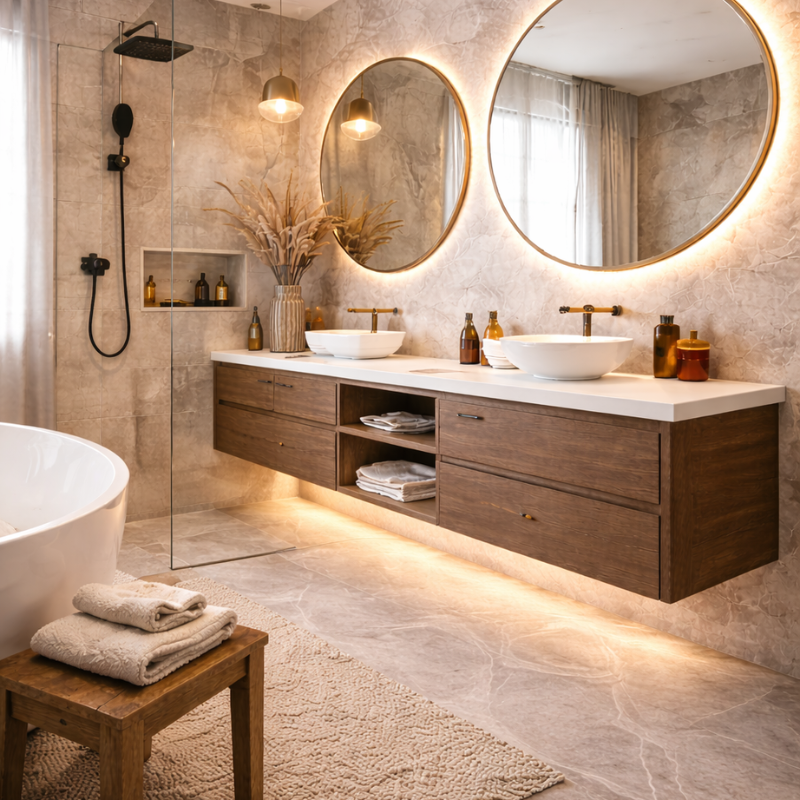
Natural materials are playing a major role in modern bathroom interiors. Stone, marble, terrazzo, and textured tiles are being used to add depth and character without overwhelming the space. Wood accents, when properly treated for moisture resistance, bring warmth and balance to otherwise minimalist designs.
Instead of glossy finishes everywhere, designers are opting for matte surfaces and tactile textures that feel more organic and lived-in. This approach helps bathrooms feel less clinical and more inviting.
3. Minimalist Yet Functional Layouts
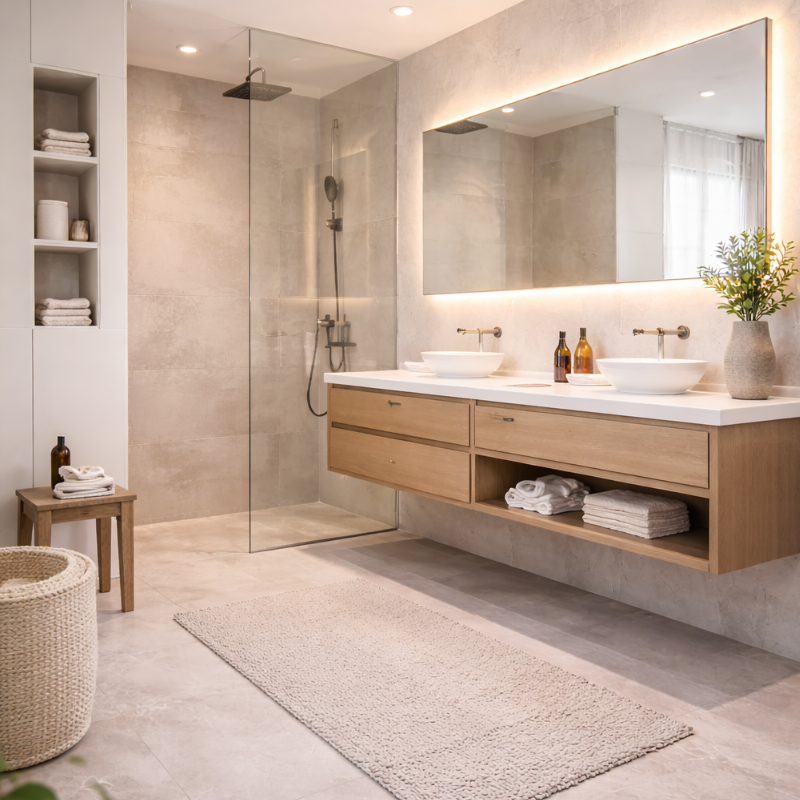
Minimalism remains a key influence, but this year it is more thoughtful and functional. Clean lines, uncluttered surfaces, and well-planned layouts define modern bathroom interiors. The focus is on eliminating visual noise while ensuring every element serves a purpose.
Wall-mounted vanities, floating shelves, and concealed storage help maintain a clean look while maximizing usable space. Even in larger bathrooms, simplicity is prioritized to create a refined and effortless aesthetic.
4. Statement Lighting with Purpose
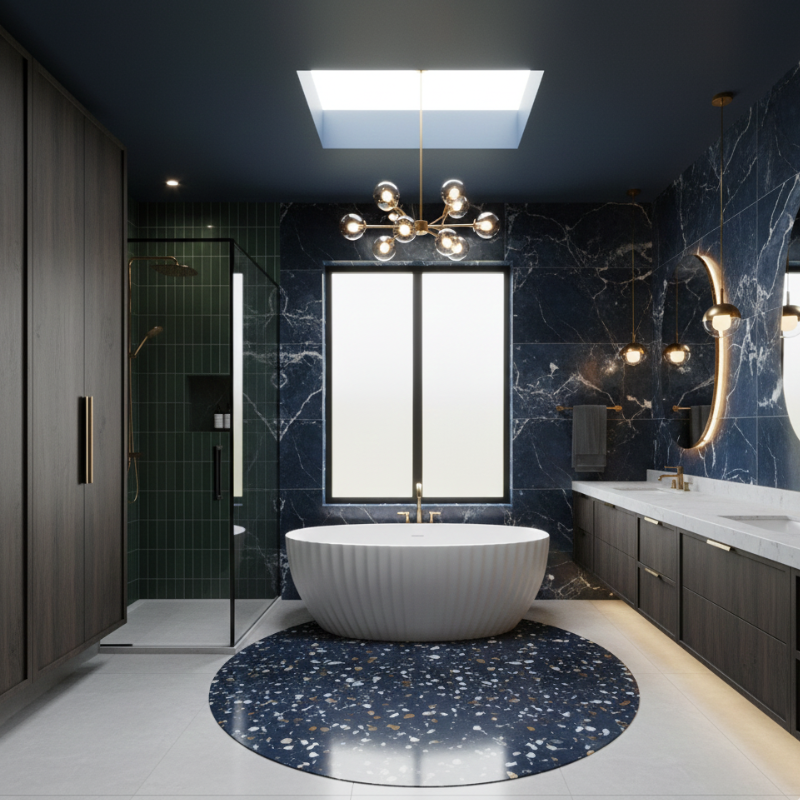
Lighting is no longer an afterthought in bathroom design. This year’s trend highlights layered lighting that combines functionality with ambience. Soft ambient lighting sets the mood, while task lighting around mirrors ensures practicality for daily routines.
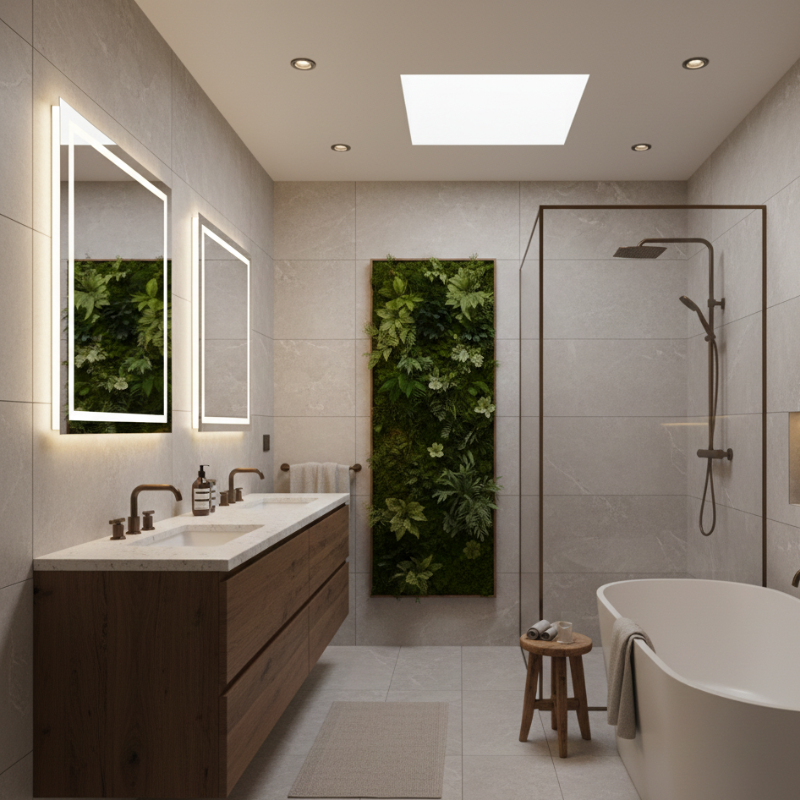
Backlit mirrors, pendant lights over vanities, and subtle LED strips under cabinets are becoming increasingly popular. These lighting elements add depth and a touch of luxury without overpowering the space. Natural light is also being embraced wherever possible, with frosted windows and skylights used to maintain privacy.
5. Smart and Concealed Storage Solutions
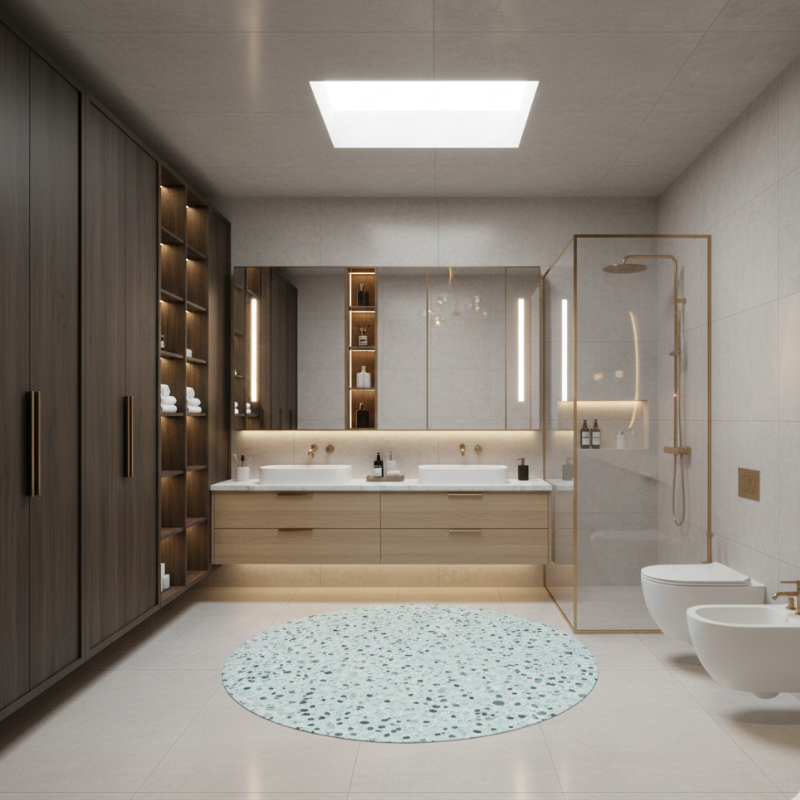
Clutter-free bathrooms are essential to modern interior design, and smart storage solutions are more important than ever. Built-in cabinets, recessed niches, and vanity drawers allow everyday items to be stored neatly out of sight.
In smaller bathrooms, vertical storage and mirrored cabinets help maximize space without compromising design. Larger bathrooms are seeing more custom cabinetry integrated seamlessly into walls, maintaining a clean and organized appearance.
6. Modern Fixtures and Coordinated Finishes
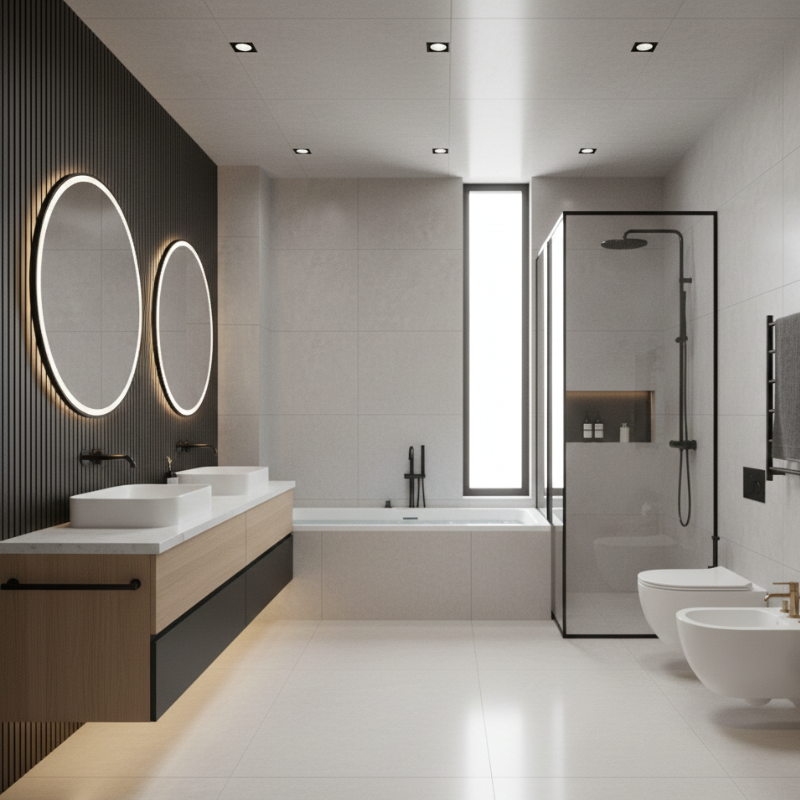
Fixtures have become a defining design element in contemporary bathrooms. Streamlined taps, minimalist showerheads, and concealed fittings contribute to a sleek and modern look.
This year, matte black, brushed nickel, and chrome finishes remain popular for their versatility and timeless appeal. The key trend is consistency—using the same finish across taps, showers, and accessories creates a cohesive and well-thought-out design. Water-efficient fixtures are also becoming standard, reflecting a growing emphasis on sustainability.
7. Personalized, Spa-Inspired Details
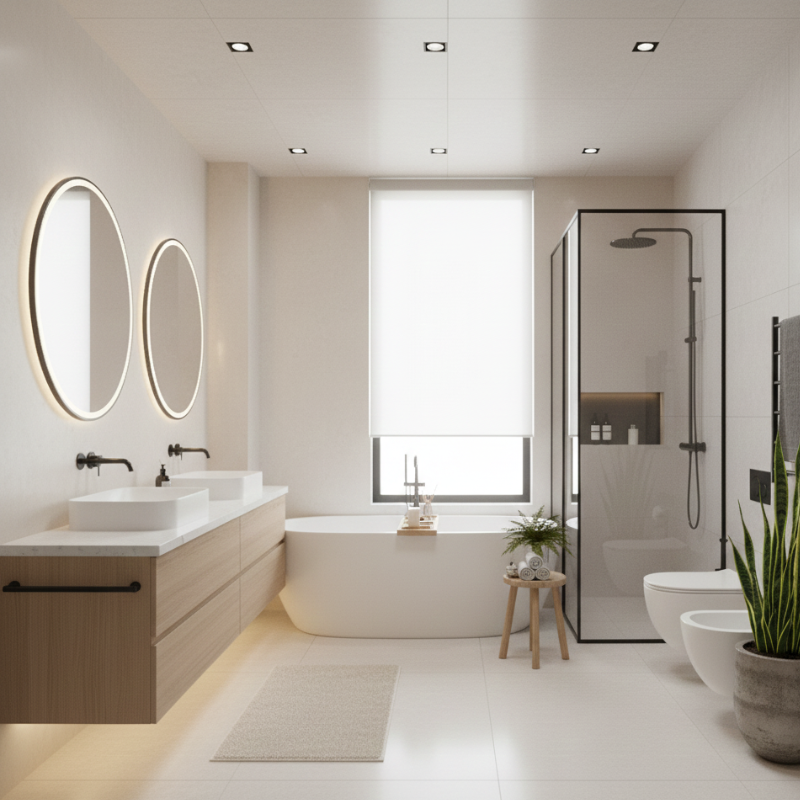
While minimalism sets the foundation, bathrooms are becoming more personalized and comfort-driven. Spa-inspired elements such as freestanding bathtubs, rainfall showers, and soft textiles are being incorporated to enhance the overall experience.
Small personal touches—like indoor plants suitable for humid environments, natural fabrics, or subtle décor pieces—add warmth without cluttering the space. The aim is to create a bathroom that feels relaxing, personal, and aligned with the homeowner’s lifestyle.
8. Sustainable and Long-Lasting Design Choices
Sustainability continues to influence bathroom interior design trends. Homeowners are choosing durable materials, water-saving fixtures, and energy-efficient lighting to reduce long-term environmental impact.
Rather than chasing short-lived trends, there is a growing preference for designs that age gracefully. Timeless colors, quality craftsmanship, and adaptable layouts ensure bathrooms remain stylish and functional for years to come.
Final Thoughts
This year’s bathroom interior design trends reflect a shift toward balance—between beauty and function, simplicity and comfort, and modern style and timeless appeal. By focusing on thoughtful layouts, natural materials, smart storage, and personalized details, bathrooms are becoming spaces that support both daily routines and moments of relaxation.
If you’re planning a renovation or exploring new design ideas, taking inspiration from these trends can help you create a bathroom that feels contemporary yet enduring. For more insights into architecture and interior design that blend creativity with practicality, continue exploring ideas that inspire smarter, more meaningful spaces.