


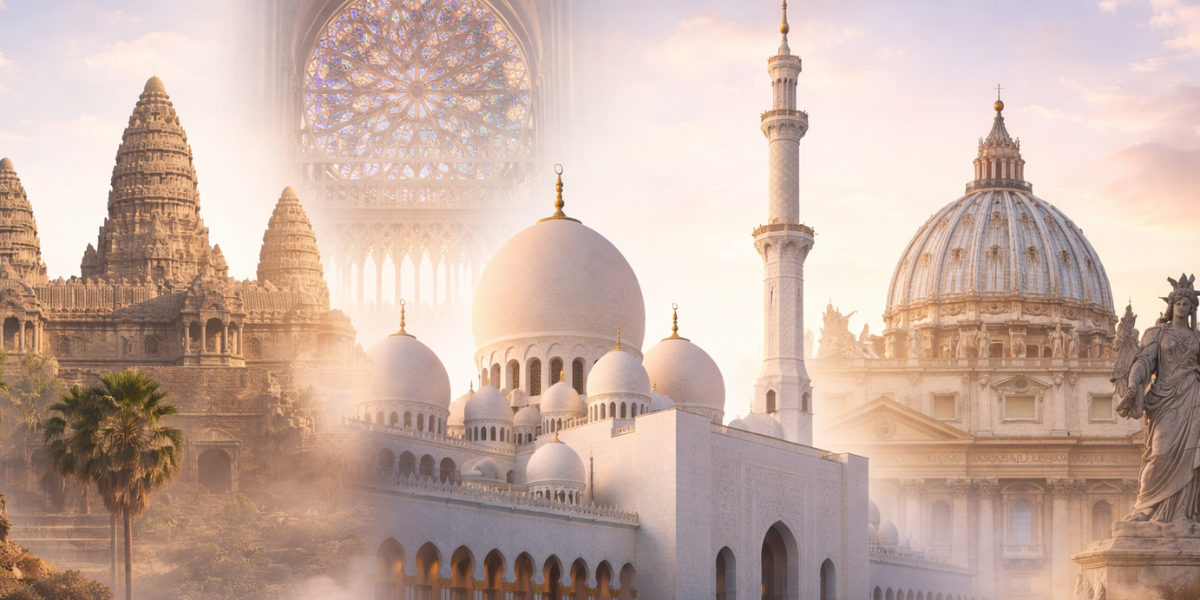
Religious architecture is more than the creation of sacred spaces—it is the physical expression of belief, philosophy, and cultural identity. Across centuries and civilizations, temples, churches, mosques, and shrines have been designed not only to shelter worshippers, but to communicate meaning through form, scale, light, and material. Every arch, dome, axis, and ornament carries symbolism that connects the earthly world to the spiritual one.
Understanding these symbolic layers allows us to appreciate religious buildings not just as architectural achievements, but as visual narratives of faith and human aspiration.
Architecture as a Language of Belief
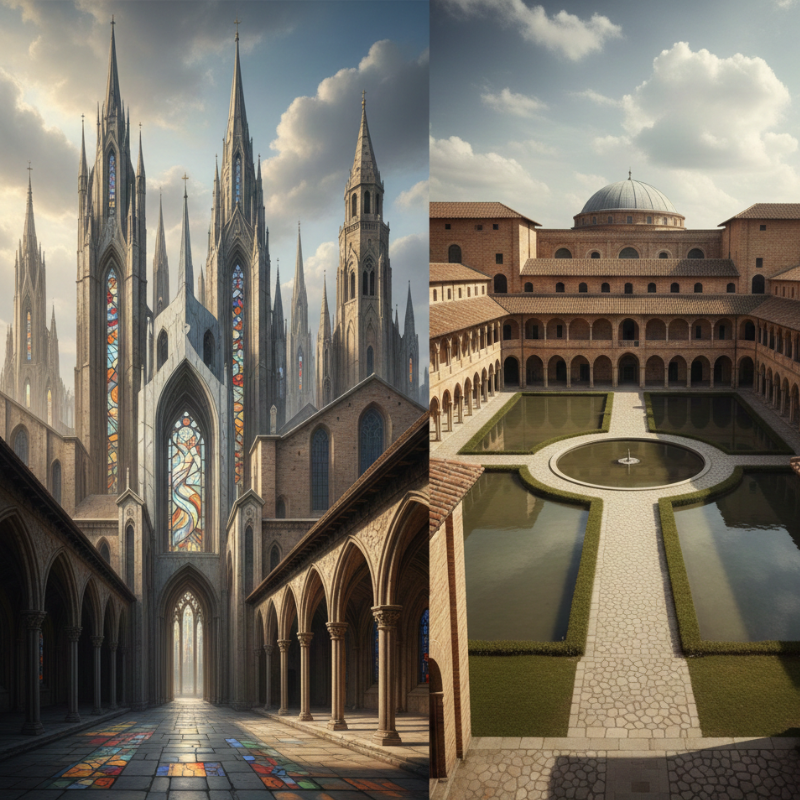
Religious architecture functions like a universal language. While beliefs differ, the intention is consistent: to inspire reverence, contemplation, and connection to something greater than oneself. This is achieved through carefully chosen spatial arrangements and visual cues.
Verticality, for example, is a recurring theme. Structures rise upward to symbolize transcendence and the human desire to reach the divine. Horizontal layouts, on the other hand, often emphasize community, balance, and spiritual journeys. The organization of space is rarely accidental—it reflects theological concepts translated into built form.
Sacred Geometry and Divine Order

One of the most powerful symbolic tools in religious architecture is sacred geometry. Circles, squares, triangles, and precise ratios appear repeatedly across cultures because they are believed to represent cosmic harmony.
- Circles often symbolize eternity and divine perfection
- Squares represent stability, order, and the earthly realm
- Symmetry conveys balance between the physical and spiritual worlds
These principles can be seen in Hindu mandalas, Islamic geometric patterns, and Gothic cathedral floor plans. Geometry becomes a bridge between mathematics, spirituality, and aesthetics—making the structure itself an act of devotion.
Light as a Spiritual Element
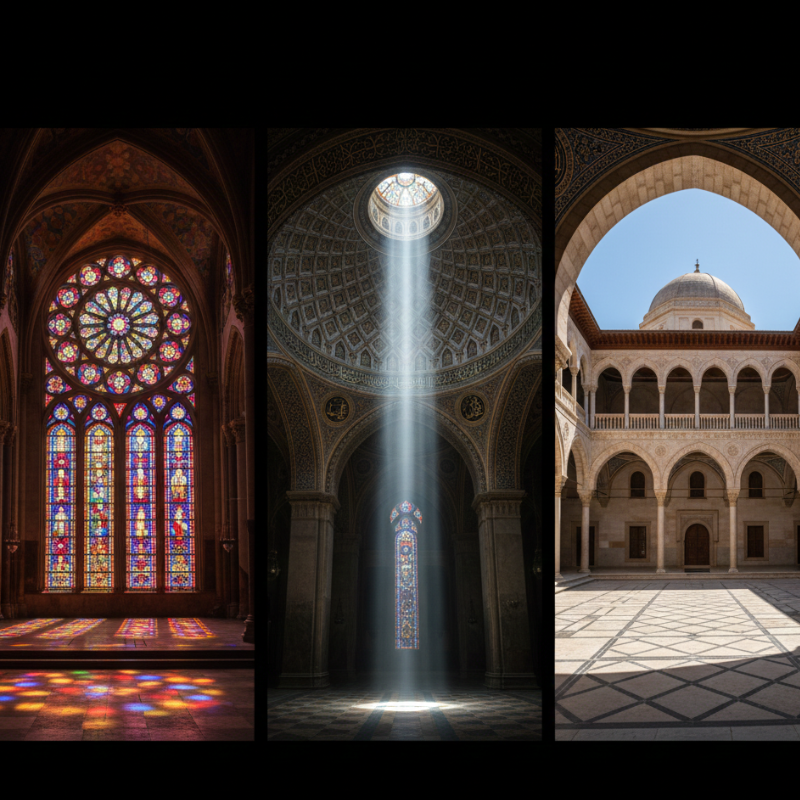
Light plays a central role in religious architecture worldwide. It is often used symbolically to represent divine presence, enlightenment, or truth.
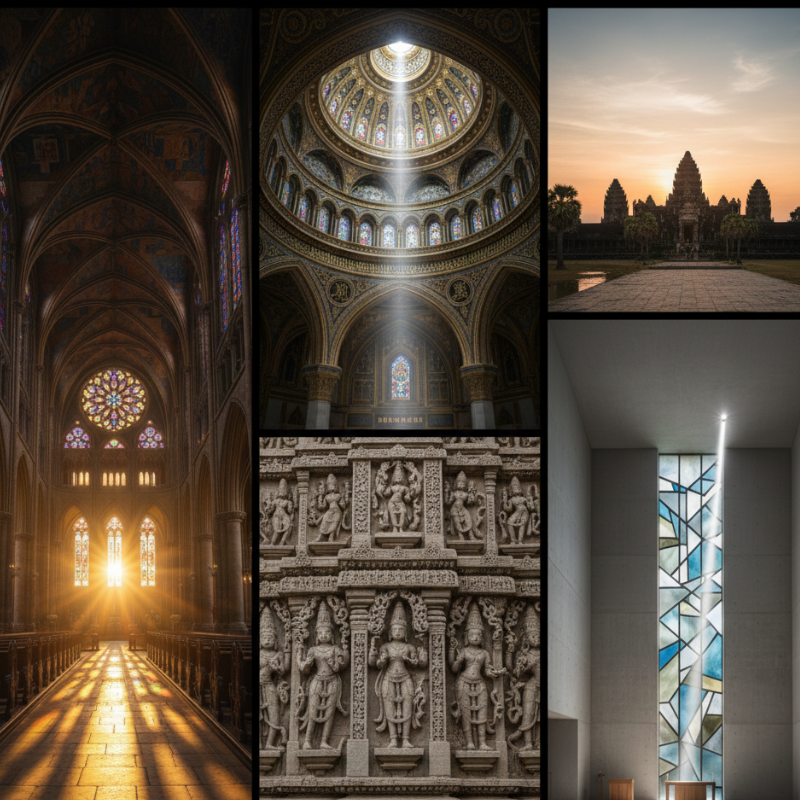
In Gothic cathedrals such as Notre-Dame Cathedral, stained-glass windows filter sunlight into vibrant colors, transforming light into a narrative medium that tells sacred stories. In contrast, many Islamic mosques use controlled natural light to create calm, meditative interiors where light enhances geometry rather than imagery.
The manipulation of light—through domes, clerestory windows, or courtyards—guides emotional experience and reinforces spiritual symbolism.
Cultural Identity Embedded in Sacred Design

Religious architecture is deeply influenced by local culture, climate, and materials. While the spiritual purpose may be universal, the architectural response is always regional.
Consider Angkor Wat, where Hindu cosmology is expressed through temple-mountain symbolism. The central tower represents Mount Meru, the mythical center of the universe, while surrounding moats symbolize cosmic oceans. The structure is both a place of worship and a three-dimensional map of the universe as understood by its builders.
Similarly, Buddhist stupas across Asia use hemispherical forms to symbolize enlightenment and the cycle of rebirth, while local materials and craftsmanship reflect regional identity.
Direction, Orientation, and Ritual Movement
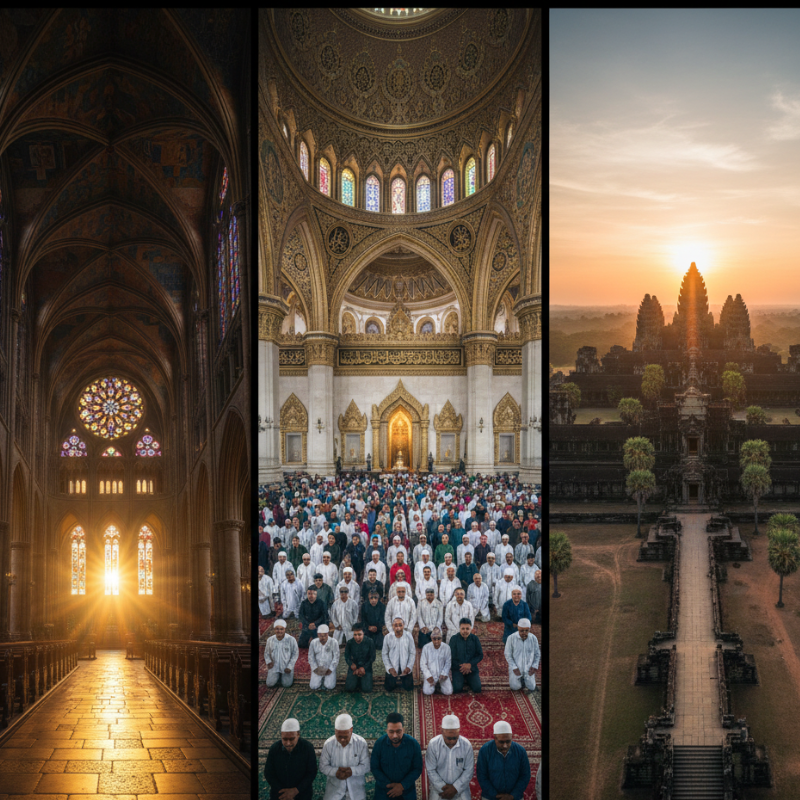
Orientation is another crucial symbolic element. Many religious buildings are aligned according to sacred directions or celestial events.
Mosques around the world are oriented toward Mecca, reinforcing unity among worshippers regardless of geography. Christian churches traditionally align eastward, symbolizing resurrection and renewal through the rising sun.
Pathways and axes guide ritual movement, turning physical motion into symbolic spiritual journeys. Entering, progressing, and reaching the central sacred space often mirrors the believer’s path toward enlightenment or salvation.
Ornamentation as Storytelling
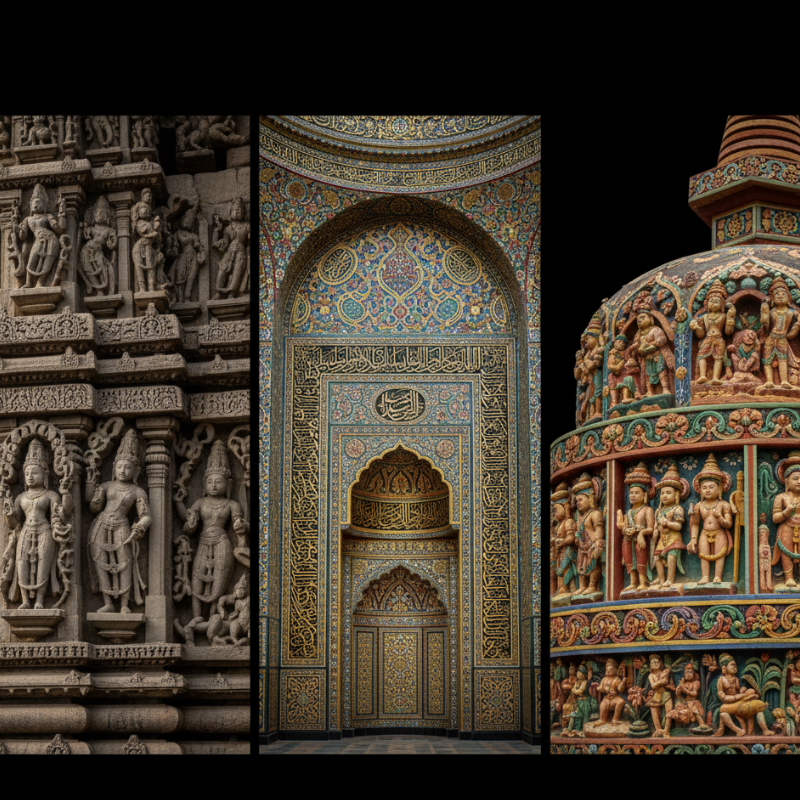
Decoration in religious architecture is rarely superficial. Carvings, mosaics, calligraphy, and sculptures serve as visual theology.
In Hindu and Buddhist temples, sculptural reliefs depict deities, cosmic events, and moral lessons. Islamic architecture, which avoids figurative imagery in sacred spaces, relies on calligraphy and geometric patterns to express the infinite nature of the divine. Verses from holy texts become architectural elements, blending word and structure into a unified spiritual message.
This approach ensures that architecture educates as much as it inspires.
Modern Religious Architecture and Evolving Symbolism
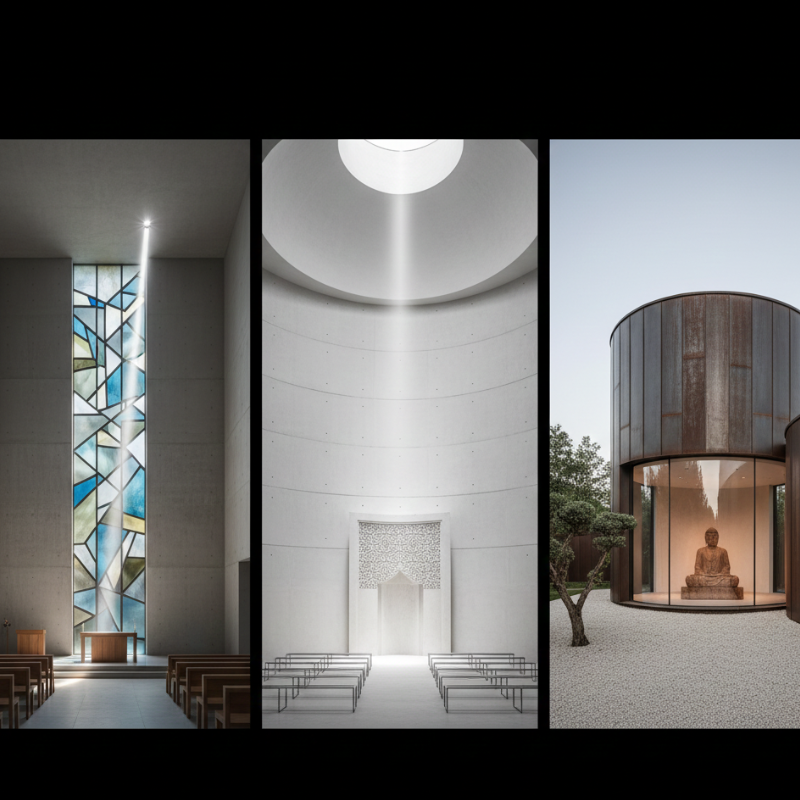
Contemporary religious architecture continues this tradition of symbolism, but often with minimalist expressions. Modern designers use clean lines, open spaces, and subtle material contrasts to evoke spirituality without overt ornamentation.
Concrete, glass, and steel replace stone and wood, yet symbolism remains—light still guides emotion, geometry still organizes meaning, and space still encourages reflection. These buildings demonstrate that symbolism in religious architecture is not fixed; it evolves alongside culture while maintaining its core purpose.
Why Symbolism Matters Today
In an increasingly globalized world, religious architecture stands as a reminder of humanity’s shared desire for meaning and belonging. These structures preserve cultural memory, foster identity, and provide insight into how societies understand life, death, and the universe.
For architects, designers, and enthusiasts, studying symbolism in religious architecture offers valuable lessons in purposeful design. It shows how buildings can communicate ideas, values, and emotions without words—something modern architecture often strives to reclaim.
Final Thoughts
World religious architecture is a dialogue between faith, culture, and design. Every dome, spire, courtyard, and corridor carries layers of symbolism shaped by belief systems and human imagination. By understanding these elements, we gain a deeper appreciation of architecture not just as shelter, but as storytelling in stone, light, and space.
If you enjoy exploring architecture through meaning, culture, and design thinking, continue discovering more insights and visual narratives at Ideas for Architecture, where form always tells a story.