



Temple architecture stands as one of humanity’s most enduring artistic and cultural expressions. Built from stone, wood, and earth, temples are more than places of worship—they are living records of history, belief systems, craftsmanship, and community identity. Across continents and centuries, temple architecture has evolved in form and symbolism, yet it continues to reflect a shared human desire to connect with the sacred.
From intricately carved sanctuaries in Asia to monumental stone temples in ancient civilizations, these structures preserve cultural heritage in ways few other buildings can.
Temples as Cultural Time Capsules
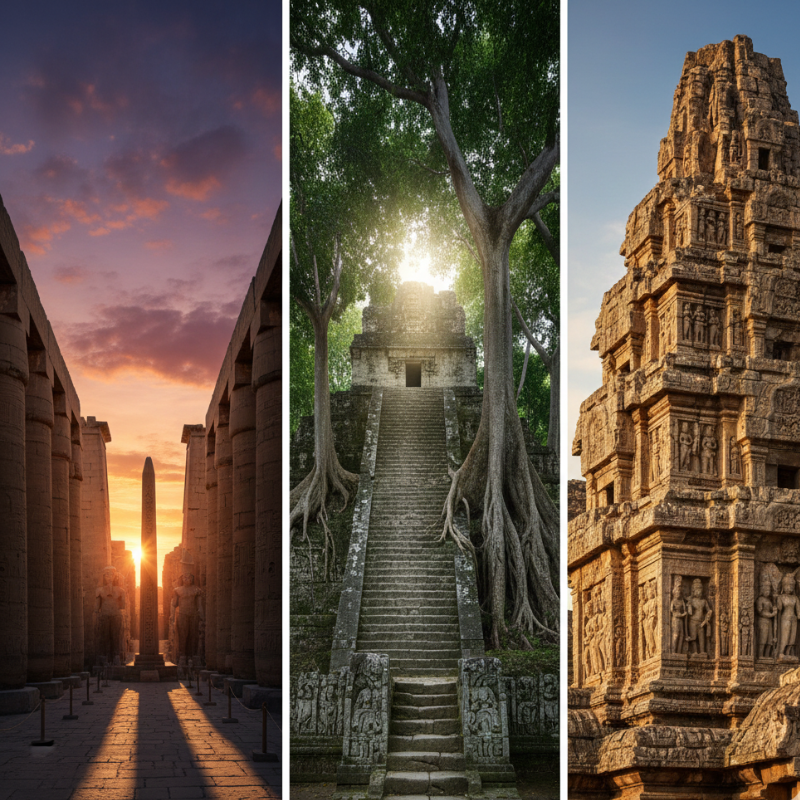
Every temple is a time capsule. Its layout, materials, and decorative elements reveal how a civilization understood the universe, society, and spirituality. Unlike modern buildings designed primarily for function, temples were conceived with layered meaning. Orientation toward the sun, sacred mountains, or cardinal directions often reflected cosmological beliefs deeply rooted in local culture.
Stone temples, in particular, have survived centuries of change. Their durability allows them to carry forward traditions, myths, and architectural knowledge long after the societies that built them have transformed.
Symbolism Carved in Stone

Temple architecture relies heavily on symbolism. Walls are rarely plain; instead, they are adorned with carvings depicting deities, celestial beings, mythological stories, and moral lessons. These sculptural narratives served both spiritual and educational purposes, especially in societies where oral tradition was central.
In Hindu temples, the structure itself is symbolic. The tower or shikhara represents the cosmic mountain—an axis connecting earth and heaven. Moving inward from the outer courtyards to the inner sanctum mirrors a spiritual journey from the physical world to divine consciousness.
A remarkable example is Angkor Wat, where temple architecture is designed as a symbolic representation of the universe. Its concentric galleries, elevated towers, and surrounding moat reflect ancient cosmological beliefs and demonstrate how architecture can embody philosophy.
Regional Identity and Temple Design
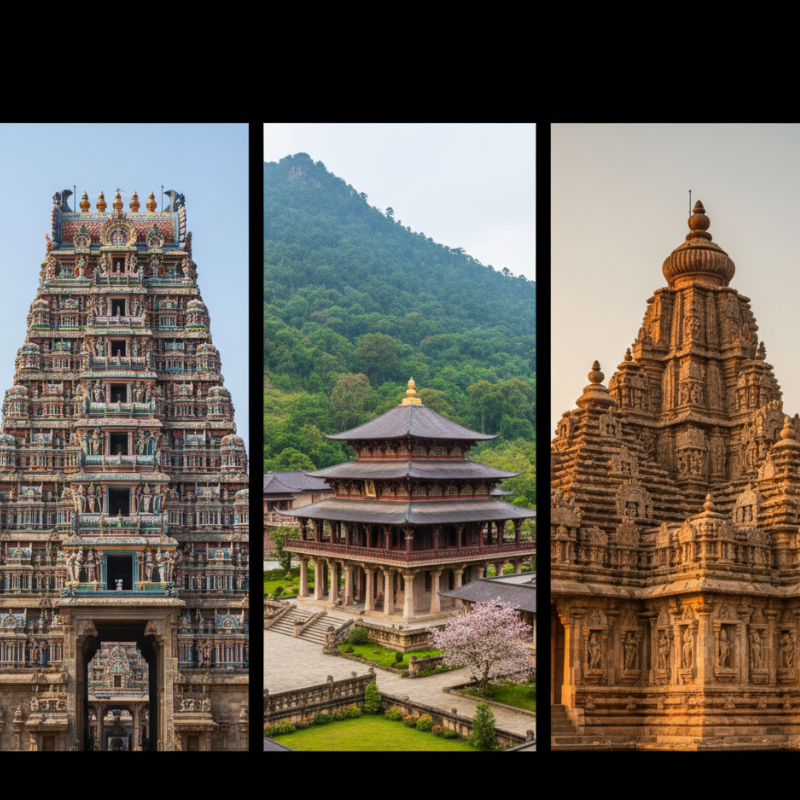
While spiritual intentions may be universal, temple architecture is always shaped by regional context. Climate, available materials, and local craftsmanship influence every aspect of design.
- In South India, temples emphasize expansive courtyards and towering gateways, showcasing detailed stone carvings.
- In East Asia, wooden temples often focus on harmony with nature, featuring sweeping roofs and serene gardens.
- In Southeast Asia, temples blend indigenous beliefs with imported religious traditions, resulting in unique hybrid forms.
The temples of Khajuraho Temples illustrate how cultural openness and artistic freedom influenced temple design. Their detailed sculptures celebrate life, spirituality, and human expression, highlighting how culture and belief coexist in architectural form.
Sacred Geometry and Proportion
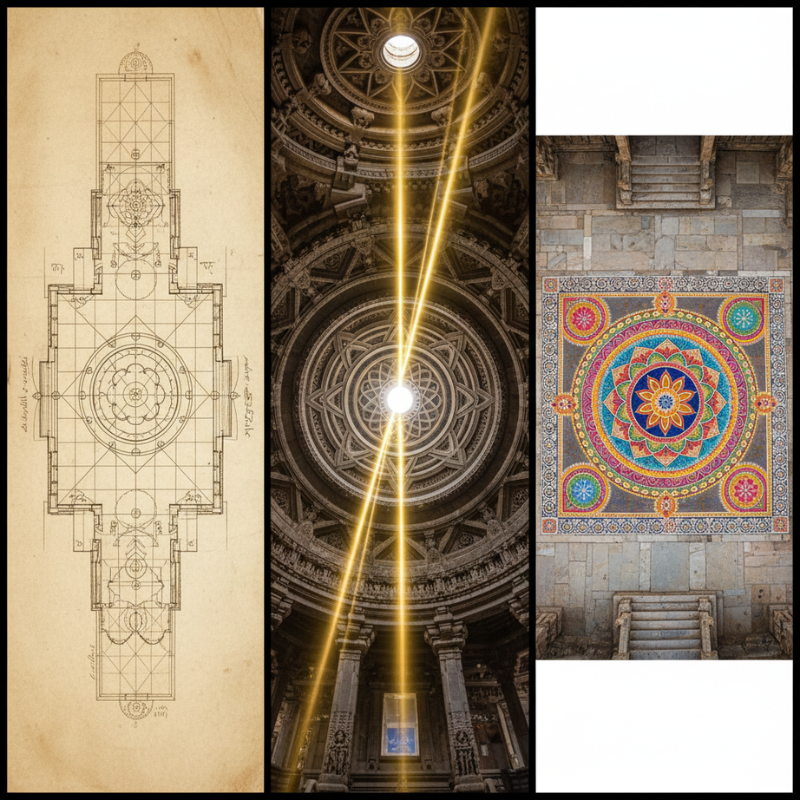
A defining feature of temple architecture worldwide is the use of sacred geometry. Proportions are carefully calculated to reflect cosmic order and balance. Grids, symmetry, and mathematical ratios are embedded in the layout, ensuring harmony between structure and symbolism.
These geometric principles were not merely aesthetic choices. They were believed to enhance spiritual energy and create spaces conducive to meditation and ritual. Even today, architects and designers study temple geometry to understand how spatial organization influences human experience.
Temples as Centers of Community Life
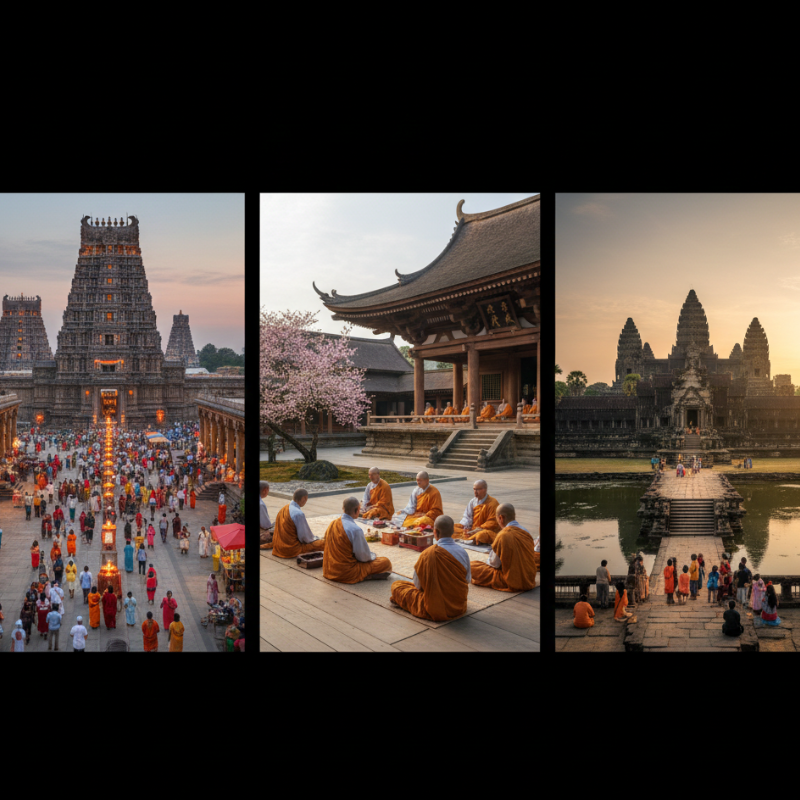
Historically, temples were not isolated religious structures. They functioned as social, educational, and cultural hubs. Festivals, gatherings, learning, and artistic performances often took place within temple complexes.
This role is evident in ancient temple cities, where architecture supported both sacred and everyday life. Pathways, halls, and open courtyards encouraged interaction while maintaining a sense of spiritual order. The temple became the heart of the community—physically and symbolically.
Preservation and Cultural Continuity
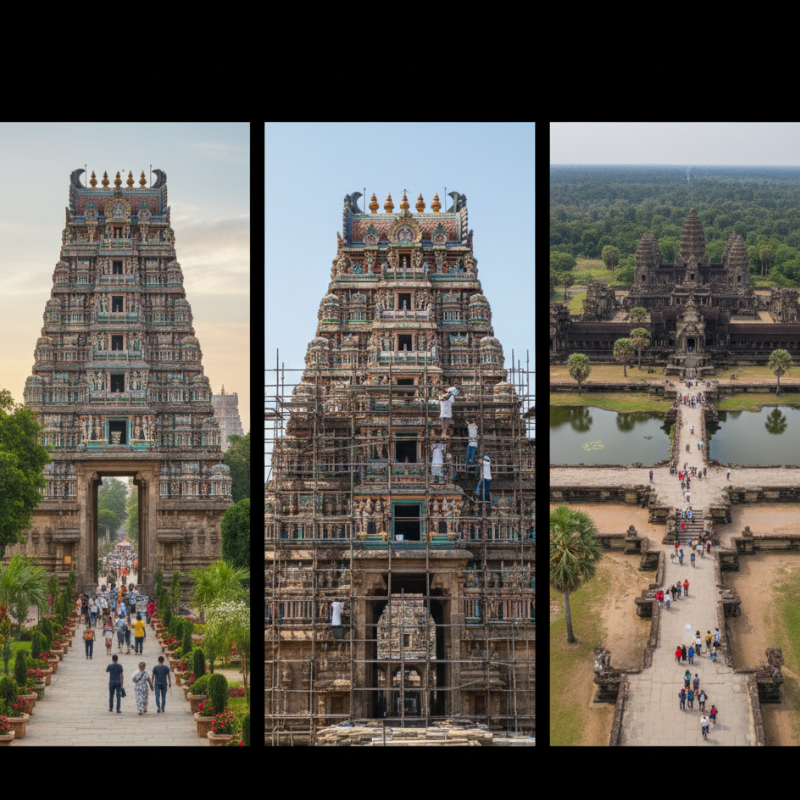
Many ancient temples now face challenges from environmental degradation, tourism pressure, and urban expansion. Preserving these structures is not only about protecting stone and sculpture but about safeguarding cultural identity.
Organizations and governments worldwide recognize temple architecture as invaluable heritage. Conservation efforts aim to maintain authenticity while adapting to modern needs. Restored temples continue to inspire architects, historians, and travelers, proving that cultural heritage remains relevant when thoughtfully preserved.
Influence on Contemporary Architecture
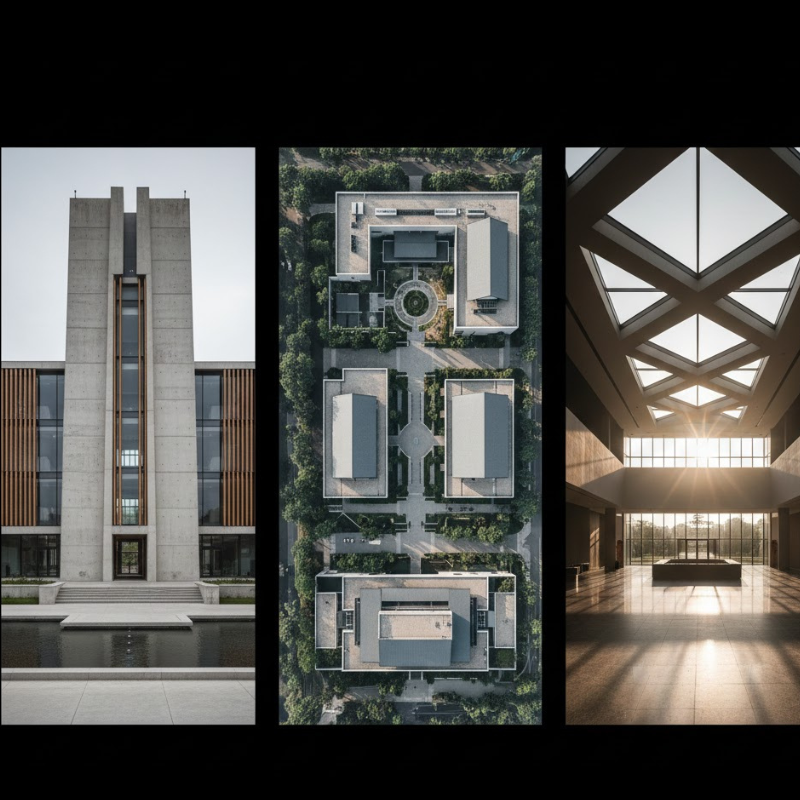
Temple architecture continues to influence modern design. Contemporary architects draw inspiration from temple spatial hierarchy, material honesty, and symbolic clarity. Elements such as axial planning, courtyards, and rhythmic repetition appear in modern civic and cultural buildings.
This influence demonstrates that temple architecture is not confined to the past. Its principles—balance, meaning, and connection—offer valuable lessons for today’s built environment, where architecture often seeks to reconnect with human experience and identity.
Why Temple Architecture Still Matters
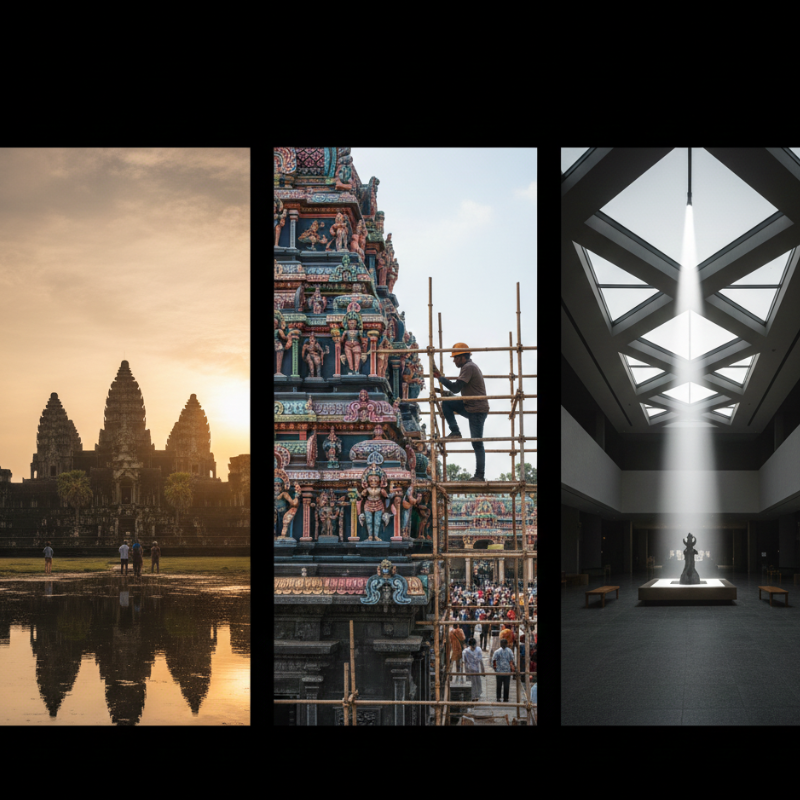
In a rapidly modernizing world, temples remind us of architecture’s deeper purpose. They show how buildings can carry stories, values, and collective memory across generations. Stone temples, weathered yet resilient, stand as proof that meaningful design transcends time.
For architecture enthusiasts, studying temple architecture offers insight into how culture, belief, and environment shape the built world. It encourages us to design not just for function, but for meaning.
Final Reflection
Temple architecture around the world is a powerful testament to humanity’s shared heritage. Carved in stone and shaped by belief, these structures connect past and present, culture and spirituality, art and architecture. They invite us to look beyond surface aesthetics and understand buildings as expressions of identity and worldview.
If you’re passionate about architecture that tells stories and preserves culture, explore more thought-provoking insights and visual inspiration at Ideas for Architecture, where timeless design meets contemporary perspective.